How did BASTET come about?
From the need to find a balance between energy, technology, and common sense.
The idea for the BASTET project was born from a simple but pressing question:
“Why, at a time when we are producing so much clean energy, do we so often lose it?”
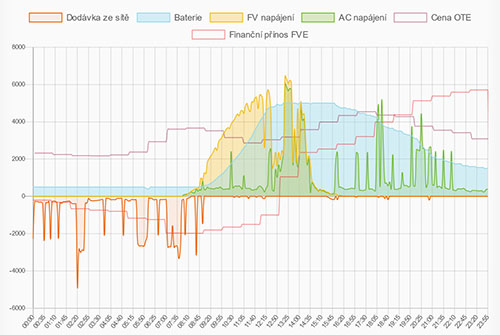
Anyone interested in energy knows that when the sun is shining and the wind is blowing, huge surpluses of electricity are generated. And because we are unable to store it efficiently, we have to limit part of our production, while at other times—when consumption is higher—we have to buy energy at high prices.
This paradox inspired us.
We wanted to find a solution that would store energy differently—more simply, more safely, and more cheaply.
Unlike most of today’s systems, we decided not to go down the battery route, but rather thermal accumulation. Energy can also be stored as heat – you just need the right material that can retain it for a long time.
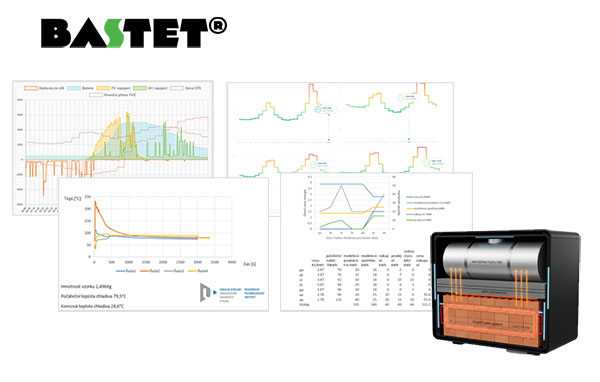
This is how the idea for a device that is now called BASTET
(Breakthrough Accumulation System for Thermal Energy Transfer) came about.
The project is the result of several years of calculations, simulations, data collection, and testing of various storage materials. The goal was to find the most suitable mixture in terms of efficiency, thermal capacity, and long-term stability. While the storage of electrical energy as heat has been used for a long time, it typically achieves very low efficiency. We have developed a new type of heat storage that overcomes these limitations – a compact system suitable for ordinary households, which can be installed in a utility room, with a storage capacity of up to 270 kWh of thermal energy.
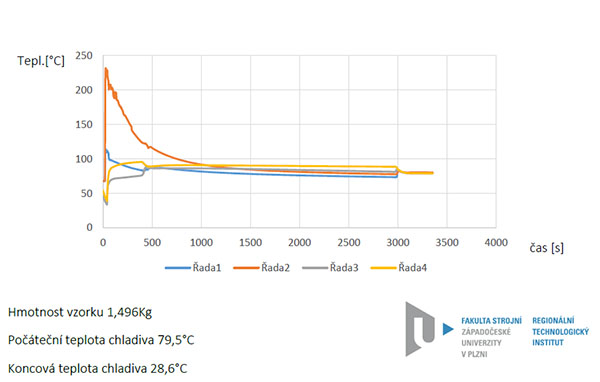
We are collaborating on development with the University of West Bohemia in Plzeň, where our first physical prototype is being created. The university is measuring its actual capacity, heat loss, and energy transfer efficiency.
Our goal is clear:
to create a storage system that will help households and the entire energy grid. A device that uses surplus photovoltaic energy will reduce energy bills and at the same time relieve the transmission system during peak times.
For us, the BASTET project is more than just technology. It is a step towards energy self-sufficiency, the efficient use of renewable resources and, above all, a more sustainable future that we can create ourselves.